
If you work in the food industry, choosing the right freezing method can help maintain product quality and support safe storage. Two common options are Individual Quick Freezing (IQF) and cold storage freezing. While both are used to preserve food at low temperatures, they differ in freezing speed, equipment design, product handling, and suitable applications.
This article compares how the two methods work, their main advantages, and where each is commonly used, helping you decide which option better suits your products and operations.

How IQF and Cold Storage Freezing Work
IQF (Individual Quick Freezing)
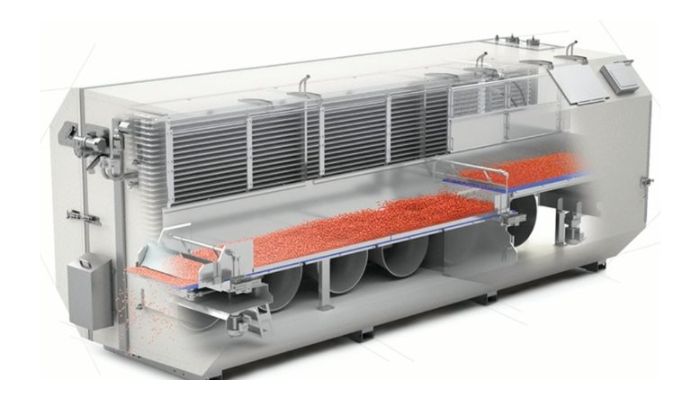
IQF, or Individually Quick Frozen, rapidly freezes individual pieces of food while helping keep them separate rather than frozen together in a solid mass. For products such as berries, vegetables, and seafood, IQF helps keep individual pieces loose and easy to portion after freezing.
A typical IQF setup includes an inlet section, a quick-freezing tunnel, freezing equipment, and an air circulation system. Depending on the IQF system, conveyors or vibrating mechanisms help distribute the product evenly before it enters the main freezing zone. Inside the freezing tunnel, high-velocity cold air removes heat rapidly from the product, allowing individual pieces to freeze quickly.
Cold Storage Freezing
Cold storage freezing uses a temperature-controlled freezer room to lower food products to the required freezing temperature. Unlike IQF, conventional cold-room freezing does not necessarily keep individual pieces separated, so unpacked or closely packed products may freeze together.
A typical cold storage freezing system consists of an insulated room and refrigeration equipment designed to maintain the low temperatures required for freezing. Food products can be stacked, placed on shelving, or stored on pallets depending on the type of product, packaging, and storage requirements.
The refrigeration system removes heat from the room and products, while airflow, product size, packaging, and loading arrangement also affect how quickly and evenly the food freezes.
IQF vs. Cold Storage Freezing Speed
IQF Freezing Speed
IQF systems are designed to achieve fast and uniform freezing, although the actual freezing time depends on factors such as product size, composition, inlet temperature, airflow, and equipment design.
IQF tunnel freezing systems commonly use high-velocity cold air at around -30°C to -40°C (-22°F to -40°F). For small individually separated products, freezing can often be completed within several minutes, while larger or denser products may require more time.
Rapid freezing generally produces smaller ice crystals, which can reduce structural damage and help preserve texture and overall product quality.

Cold Storage Freezing Speed
Cold storage freezing generally takes longer than IQF tunnel freezing. A cold storage freezer room may operate at approximately -30°C to -35°C (-22°F to -31°F), but freezing typically takes several hours rather than minutes. The exact freezing time depends on product size, packaging, loading density, airflow, and refrigeration capacity.
Larger, densely packed, or heavily loaded products require more time to reach the target product temperature.
How Freezing Affects Food Quality
Freezing preserves food by slowing microbial growth and chemical reactions. However, as the temperature falls and water changes from liquid to ice, physical and chemical changes can influence texture, moisture retention, color, and overall quality after thawing.
Ice Crystal Formation
As food cools below its freezing point, water begins to form ice crystals. Because food contains dissolved salts, sugars, proteins, and other substances, its water does not freeze all at once. As ice forms, water is drawn into the growing crystals while dissolved substances become more concentrated in the remaining unfrozen tissue.
This matters because damaged cells are less able to retain water after thawing. As a result, the food may lose firmness, release more liquid, or develop a softer texture.
Changes in Food Texture
Texture changes are closely related to what happens to the food’s cellular and structural components during freezing. In fruits and vegetables, damage to cell membranes and supporting tissue can reduce firmness, which is why some products become softer after thawing. In meat and seafood, changes to muscle cells and proteins can affect their ability to retain water, influencing juiciness and mouthfeel.
The effect varies considerably between foods because their cell structure, water content, fat content and composition are different.
Drip Loss After Thawing
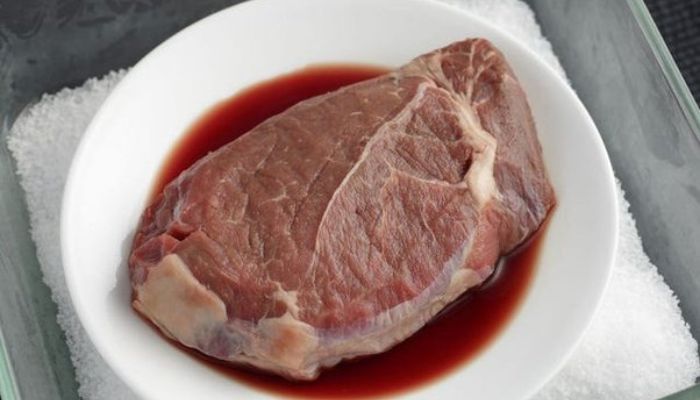
During freezing, some water moves out of cells and becomes incorporated into ice crystals. At the same time, structural damage can reduce the ability of the tissue to hold that water. When the ice melts during thawing, damaged cells may not be able to reabsorb and retain all of the released water, causing some moisture to escape as drip.
This liquid can contain water and soluble food components. Excessive drip loss can reduce product weight and yield while also making meat or seafood less juicy and affecting the texture of other foods.
Moisture Loss and Freezer Burn
During frozen storage, food can gradually lose moisture as ice on its surface turns into water vapor. Over time, this can leave the surface dry, pale, or tough, a condition known as freezer burn. Poor packaging and temperature fluctuations can make it worse, while proper packaging and stable temperature help reduce moisture loss.
Color Changes in Frozen Food
Color changes can occur through several different processes during freezing and frozen storage. As cells are damaged and moisture moves within food, pigments may be affected or become more exposed to oxygen. Oxidation can alter pigments in foods such as meat, while residual enzyme activity can contribute to color changes in some fruits and vegetables.
Surface dehydration can also make frozen food appear pale or discolored. Although low temperatures slow these reactions, they do not stop them completely. Proper packaging, stable storage, and appropriate product preparation can help maintain color during frozen storage.
IQF vs Cold Storage Freezing Application
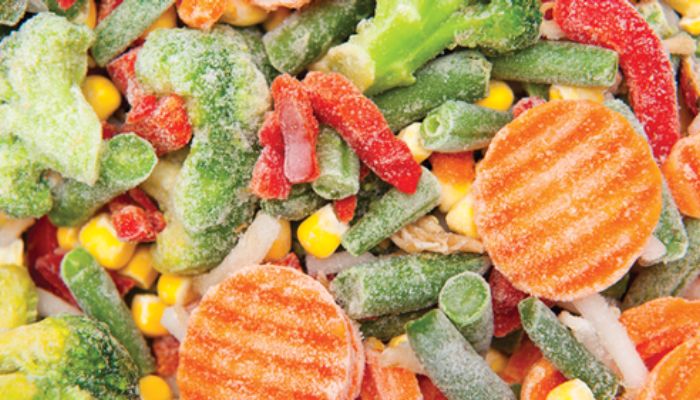
The choice between IQF and cold storage freezing often depends on the product, production volume, packaging, and how the frozen product will be handled after processing.
Best Application for IQF (Individually Quick Frozen)
IQF (Individually Quick Frozen) is commonly used for small portion-sized products that need to remain individually separated after freezing.
Typical applications include:
- Berries and other small fruits
- Peas, corn, and diced vegetables
- Shrimp and other small seafood products
- Prepared food ingredients and portioned products
IQF is particularly useful when the product needs to remain free-flowing, easy to portion, and visually consistent after freezing. It is often chosen for products sold in bags or used as individual ingredients because processors can handle and package the pieces without them forming a solid frozen block.
Best Application for Cold Storage Freezing
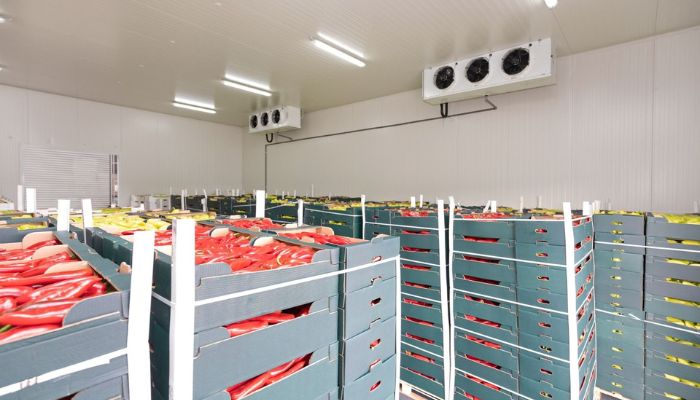
Cold storage freezing is more suitable for larger, packaged, bulk, or palletized products where individual separation is not required.
Typical applications include:
- Packaged meat and poultry
- Large cuts of meat
- Cartons of frozen food
- Bulk food products
- Palletized products
- Products that need both freezing and subsequent frozen storage in the same facility
Cold storage freezing is often preferred when handling larger loads or different product sizes within the same facility. It can also be more practical for operations that need flexible storage capacity rather than a dedicated continuous freezing line.
Conclusion
IQF (Individually Quick Frozen) and cold storage freezing are designed for different processing needs. IQF is better suited for small, individual products that need to remain separated and easy to portion, while cold storage freezing is generally more practical for larger, packaged, bulk, or palletized products.
The most suitable method depends on product, production capacity, handling requirements, available space, and investment budget. If cold storage freezing is the better fit for your operation, Sunnyda Cold Room can help design a cold room based on your product type, required temperature, storage capacity, and operating conditions.
Frequently Asked Questions
1. What is the main difference between IQF and cold storage freezing?
The main difference is freezing speed and product handling. IQF rapidly freezes individual pieces of food while helping keep them separate. Cold storage freezing freezes products more slowly inside a freezer room and is commonly used for packaged, bulk, or palletized products.
2. Is IQF better than cold storage?
Not always. IQF is better for small products that need fast freezing and individual separation, while cold storage freezing is more practical for larger or packaged goods.
3. What foods are suitable for IQF?
IQF is commonly used for berries, vegetables, shrimp, seafood, and other small or portion-sized foods.
4. How long does IQF freezing take?
Small products may freeze within several minutes, but the actual time depends on product size, temperature, airflow, and freezer design.
5. Why does IQF help preserve food quality?
Faster freezing forms small ice crystals, which can reduce structural damage and help maintain texture after thawing.
You may also find these blog posts useful
Blast Freezer for Fast and Efficient Food Freezing
Commercial Freezer vs Residential Freezer: Key Differences You Should Know

